Arabic
 French
 Deutsch
 Urdu
Urdu Pashto
 Swahili
 Hausa
Hausa

'God’s gatekeepers': How fake piety fuels moral cruelty
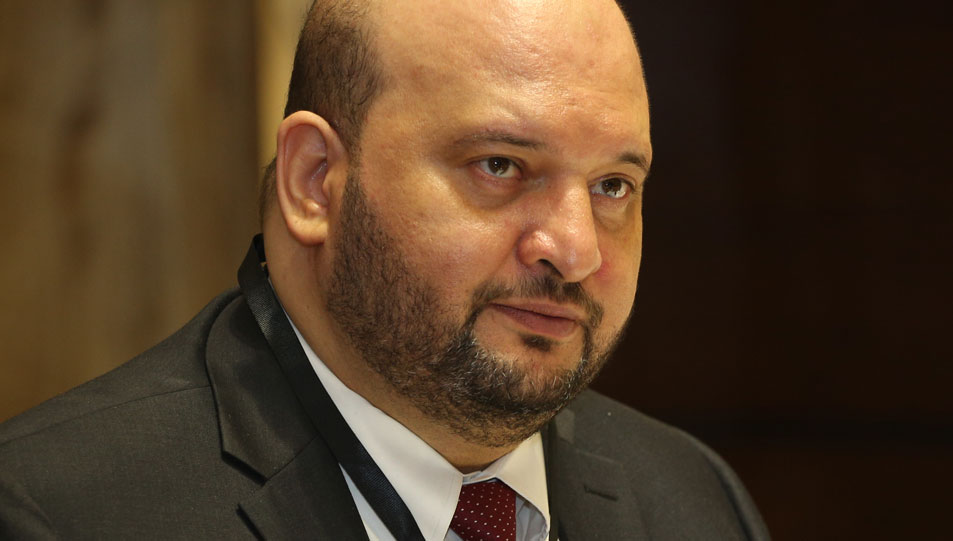
Dr. Ibrahim Negm
Senior Advisor to Egypt’s Grand Mufti
One of the most disturbing shifts in contemporary religious culture is the rise of a mindset that treats faith as a license to judge, label, and condemn others.
Instead of being a force for humility and self‑reform, religion is weaponized into a machine for sorting people into “saved” and “damned,” “true believers” and “hypocrites,” often on the flimsiest of grounds. This is not a marginal attitude; it has seeped into everyday discourse, social media, and even some religious platforms, creating a climate where arrogance dresses itself in the garments of devotion.
At the heart of this distortion lies a simple but deadly move: people pretend to know what only God can know. They no longer stop at evaluating outward behaviour, which is necessary for any moral community. They go further and claim access to invisible intentions, inner sincerity, and ultimate destiny. The verdicts are swift and sweeping: this person is misguided, that one is a sinner, that group are unbelievers, those scholars are sell‑outs. Once such labels stick, they justify a whole range of attitudes—from cold social exclusion to outright violence.
Classical Islamic teaching, like other religious traditions, drew a sharp line between what humans can judge and what belongs to God alone. The famous story of Usama ibn Zayd is a case in point: he killed an enemy on the battlefield after the man uttered the testimony of faith, assuming he said it only to save his life. The Prophet’s intense rebuke—repeatedly asking, “Did you kill him after he said there is no god but God?” and questioning whether Usama had opened the man’s heart—was meant to close the door to precisely this kind of moral presumption. The rule is clear: in this world, judgments are based on the outward, while inner motives and final salvation are God’s domain.
Ignoring that rule has never been a purely theoretical mistake; it has always had blood on its hands. The early Khawarij movement is the archetype: they branded major companions of the Prophet as unbelievers and felt religiously justified in killing fellow Muslims while leaving actual enemies alone. The pattern has repeated across history and into the present. Once a person or group is successfully reclassified as “not really Muslim” or “enemies of God,” it becomes psychologically easier to strip them of rights, dignity, and ultimately life itself. Every bullet fired at a worshipper in a mosque, every bomb planted in a market, was first preceded by a private court in someone’s mind declaring the victims illegitimate.
This obsession with classification does more than feed violence; it corrupts the image of religion itself. For many ordinary onlookers, especially young people, faith comes to be associated with harshness, hair‑trigger condemnation, and an almost gleeful readiness to throw people into hell with words. Instead of seeing religion as a path to inner refinement and social mercy, they experience it as a tribunal perched on social media, issuing daily decrees about who is “on the Sunnah,” who is a “sell‑out,” and who deserves to be ostracised. It is hardly surprising that such a climate pushes many away from serious religious engagement altogether.
Ironically, the very people most eager to scan others’ hearts are often the least self‑reflective. Classical piety was built on the opposite impulse: suspicion of one’s own ego and charity toward others. Some early Muslims would say, “If I heard that a town had been swallowed by the earth, I would fear that I was the cause,” expressing radical self‑accountability rather than quick blame of others. The new “gatekeepers of salvation,” by contrast, seem remarkably confident in their own status with God and remarkably certain about everyone else’s deficiencies. That is not zeal; it is spiritual hubris.
The damage is not confined to individual souls. Socially, this mentality erodes trust and fractures communities. When every disagreement in jurisprudence, politics, or even personal style is potentially grounds for questioning someone’s faith, constructive debate becomes almost impossible. Scholars are dismissed as “regime scholars,” activists as “hypocrites,” ordinary believers as “ignorant masses.” Families are split, mosques are divided, and the public sphere fills with mutual suspicion instead of shared moral purpose. The result is a society that is religious in language but spiritually hollow, because its energy is spent on surveillance of others instead of service to them.
Reclaiming that balance is not a luxury; it is a moral emergency. As long as fake piety rewards those who shout the loudest about other people’s damnation, extremists will find fertile ground for recruitment. Young people looking for certainty will be seduced by the simplistic comfort of a world neatly divided into “us” and “them.” The only antidote is a renewed religious culture that combines clarity of principle with humility of judgment: firm on core values, gentle with people; serious about sin, but even more serious about mercy.
In the end, no human being was appointed as God’s gatekeeper. The more someone claims that role, the more likely they are to be driven not by pure faith, but by ego, fear, or the hunger for control. A healthier religious vision invites people to turn that critical gaze inward, to fight the urge to sit on God’s throne, and to remember that on the Day of Judgment, each of us will have more than enough to answer for without having played judge, jury, and executioner over everyone else’s soul.
*Originally published on Nov. 27, 2025—Ahramonline